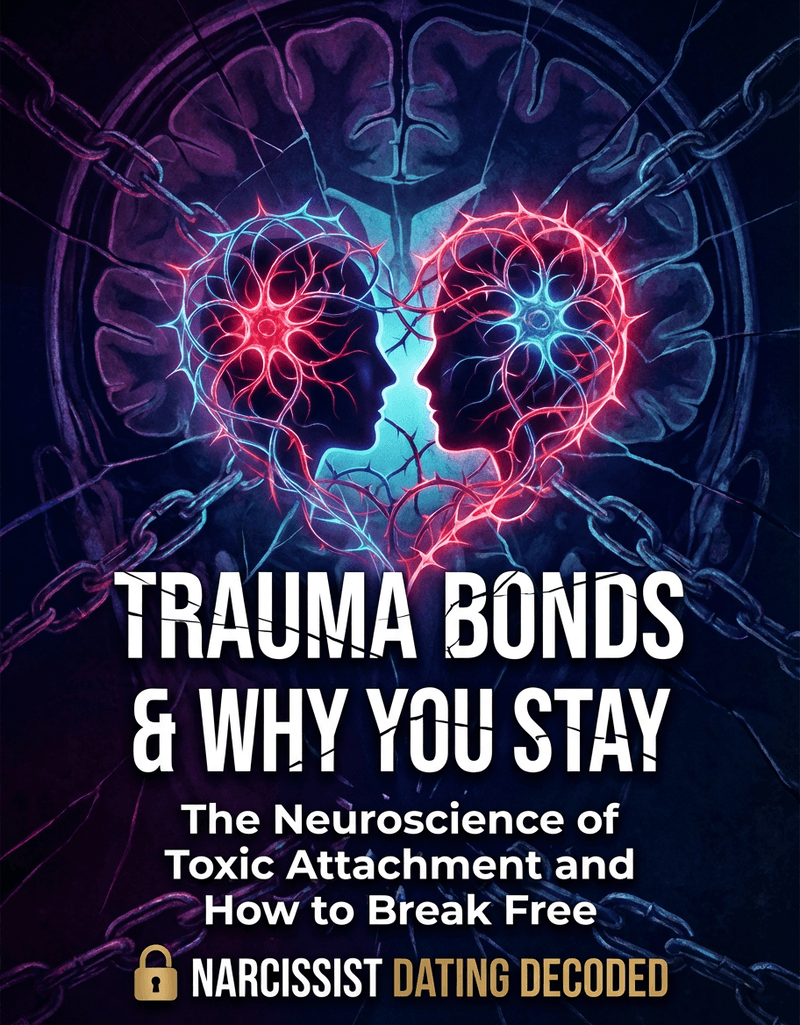
Trauma Bonds & Why You Stay
The neuroscience behind why leaving is so hard
- ✓The neuroscience of why leaving abusive relationships is genuinely difficult
- ✓How cortisol, dopamine, and oxytocin interact in the abuse cycle
- ✓The role of the nervous system's threat response in keeping you attached
- ✓Why the brain processes abusive relationship loss similarly to grief for a loved one
What You Will Learn
Trauma Bonds and Why You Stay examines the neuroscience behind one of the most misunderstood aspects of abusive relationships: the genuine neurobiological reason why leaving is so hard. This book is written specifically for people who have been asked "why don't you just leave?" and have struggled to explain what they themselves could not fully understand.
Drawing on research in neuroscience, attachment theory, and trauma psychology, this book explains the specific brain mechanisms that are activated in abusive relationship cycles, why these mechanisms are not a choice or a character flaw, and what they actually require to heal.
- The neuroscience of why leaving abusive relationships is genuinely difficult
- How cortisol, dopamine, and oxytocin interact in the abuse cycle
- The role of the nervous system's threat response in keeping you attached
- Why the brain processes abusive relationship loss similarly to grief for a loved one
- How childhood attachment history interacts with adult trauma bonding
- Brain-based recovery strategies that work with your neurology rather than against it
If you have stayed, gone back, or continued to grieve someone who hurt you long after the relationship ended, this book provides the neurological and psychological explanation that makes sense of all of it.
Common Questions
Frequently Asked Questions
Answers about this guide and what it covers.
Knowledge Is the First Step
Every guide in Narcissist Dating Decoded was written for people who deserve clear, honest answers about what they have been through.