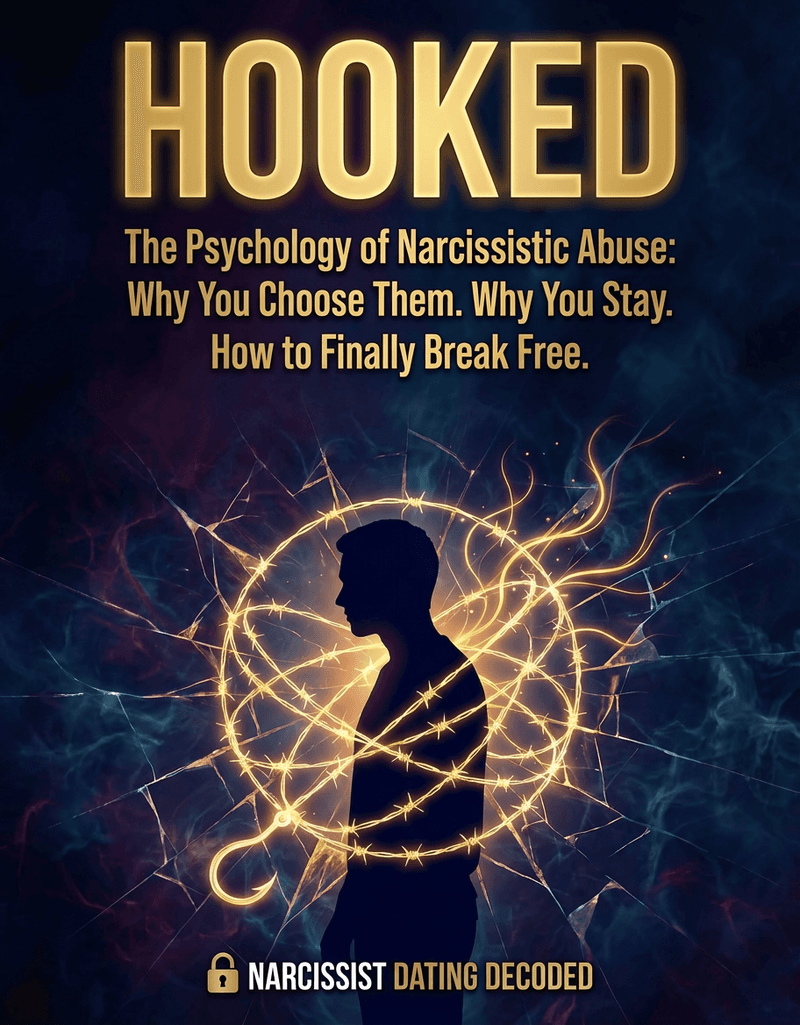
HOOKED
Understanding the psychology behind narcissistic attachment
- ✓Why narcissistic relationships feel like addiction: the neuroscience of cortisol, dopamine, and oxytocin
- ✓Attachment theory: how your specific childhood experiences created your specific vulnerability
- ✓Trauma bonding explained: why leaving triggers terror rather than relief
- ✓Intermittent reinforcement: the neurological mechanism that makes unpredictable kindness more compelling than consistent love
What You Will Learn
HOOKED opens with the voice that survivors know: "Maybe you have left and gone back more times than you can count. Maybe you know you should leave but something keeps you stuck. Maybe you finally got out but cannot stop thinking about them, missing them, wondering if you made a mistake. Maybe people keep telling you to just leave and you want to scream because if it were that simple, you would have done it already." The book's response is immediate: You are not crazy. You are not weak. You are not stupid. You are caught in something that has a name, a psychology, and a neuroscience.
HOOKED covers four core explanations: what narcissistic abuse actually is and why it is so damaging, how your childhood shaped the partners you choose (attachment theory), why you stay even when you know you should leave (trauma bonding), and what is happening in your brain that makes this feel like addiction. The neurochemistry chapter explains exactly how cortisol, dopamine, and oxytocin interact during the abuse cycle to create genuine dependency.
- Why narcissistic relationships feel like addiction: the neuroscience of cortisol, dopamine, and oxytocin
- Attachment theory: how your specific childhood experiences created your specific vulnerability
- Trauma bonding explained: why leaving triggers terror rather than relief
- Intermittent reinforcement: the neurological mechanism that makes unpredictable kindness more compelling than consistent love
- The exit framework: how to break free when willpower alone has failed multiple times
- Staying out: the patterns that lead to re-entry and how to interrupt them before they restart
The book then moves into the exit: how to break free even when it feels impossible, and how to stay out and stop repeating the pattern. HOOKED is the guide for someone who understands intellectually that they need to leave but cannot make their body and nervous system agree.
Common Questions
Frequently Asked Questions
Answers about this guide and what it covers.
Knowledge Is the First Step
Every guide in Narcissist Dating Decoded was written for people who deserve clear, honest answers about what they have been through.