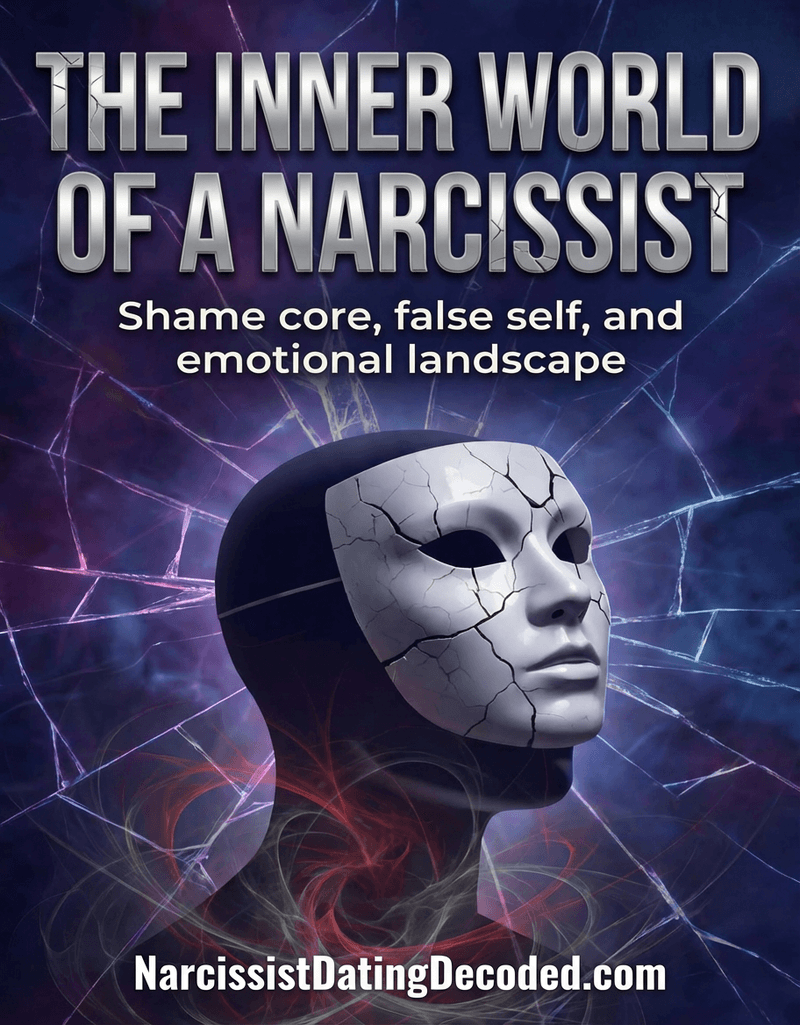
The Inner World of a Narcissist
Shame core, false self, and the emotional landscape beneath
- ✓Chapter 1: The Emotional Life of a Narcissist — what they feel intensely (rage, envy, shame, elation) and what they struggle to feel (compassion, gratitude, contentment, intimacy)
- ✓Chapter 2: Do Narcissists Feel Empathy? — the cognitive vs. affective empathy distinction, and why high cognitive empathy without affective empathy is a weapon, not a gift
- ✓Chapter 3: Guilt, Shame, and Remorse — the critical difference between guilt (I did something bad) and shame (I am something bad), and what each produces in the narcissist
- ✓Chapter 4: Can a Narcissist Truly Love? — the honest, nuanced answer to the question survivors cannot stop asking
What You Will Learn
The Inner World of a Narcissist answers the questions that keep survivors up at night: Did they ever love me? Do they feel anything at all? Do they know what they are doing? Are they capable of guilt? The introduction frames the book as a journey inside the narcissistic mind — not to generate sympathy for the narcissist, but to give you the understanding you need to stop asking questions that have been keeping you stuck.
Across ten chapters, the book examines what narcissists actually feel (and what they cannot), the two types of empathy and why narcissists weaponize cognitive empathy while lacking affective empathy, the difference between guilt and shame, the anatomy of the narcissistic apology, why they rage, why they cry, how projection works, and what all of it means for your healing. The book is subtitled Emotions, Empathy, and the Truth Behind the Mask.
- Chapter 1: The Emotional Life of a Narcissist — what they feel intensely (rage, envy, shame, elation) and what they struggle to feel (compassion, gratitude, contentment, intimacy)
- Chapter 2: Do Narcissists Feel Empathy? — the cognitive vs. affective empathy distinction, and why high cognitive empathy without affective empathy is a weapon, not a gift
- Chapter 3: Guilt, Shame, and Remorse — the critical difference between guilt (I did something bad) and shame (I am something bad), and what each produces in the narcissist
- Chapter 4: Can a Narcissist Truly Love? — the honest, nuanced answer to the question survivors cannot stop asking
- Chapters 5–9: The Narcissistic Apology, Blame Shifting, Narcissistic Injury and Rage, Do Narcissists Cry, and Projection — each tactic explained from the inside out
- Chapter 10: What This Means for You — how to use understanding as a shield, not a cage, and why you were asking for basic connection from someone whose capacity for it is fundamentally impaired
A central insight from the book: narcissists are not empty robots devoid of all feeling, but they are also not the secretly loving people you may have hoped they were. Their emotional landscape includes genuine rage, deep envy, pervasive shame, and fleeting elation — but the sustained contentment, authentic gratitude, genuine compassion, and emotional intimacy that define healthy relationships are largely absent or inaccessible to them.
Common Questions
Frequently Asked Questions
Answers about this guide and what it covers.
Knowledge Is the First Step
Every guide in Narcissist Dating Decoded was written for people who deserve clear, honest answers about what they have been through.